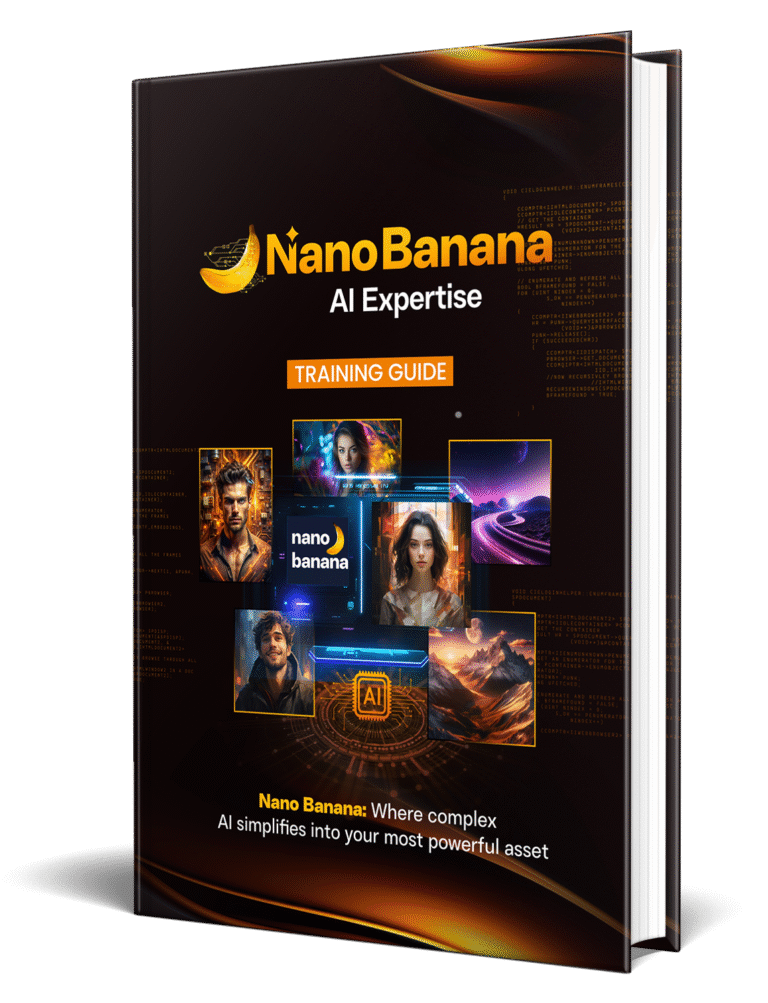
The Hidden Engine Behind Nano Banana AI: What It Is, How It Works & Why Everyone’s Talking About It

There are moments in tech when something small slips into the conversation—quietly, almost politely—and then refuses to leave. Nano Banana AI is one of those moments. You hear about it once, and suddenly it’s everywhere: in developer chats, creator forums, late-night Reddit breakdowns, and the subtle undercurrents of AI newsletters written by people who rarely hype anything.
It’s not the usual “bigger, louder, more computationally gluttonous” kind of breakthrough. Nano Banana AI bends the trend line. It’s miniature. Unassuming. A model you could almost overlook if you didn’t know what you were staring at. And yet… something about it feels different—fast in a way that feels personal, compact in a way that feels intentional, powerful in a way that seems quietly rebellious.
The curiosity builds.
The noise grows.
And you start to wonder: What exactly is this thing, and why is everyone suddenly talking about it?
Let’s peel it open.
What Nano Banana AI Really Is (And Why This Definition Matters More Than Usual)
At its core, Nano Banana AI is an ultra-compact intelligence model—built not for scale, but for agility. It’s engineered to deliver multimodal capabilities (text, images, audio, reasoning) through a tiny, almost improbable computational footprint. It behaves like a full-scale model but feels more like a pocket-sized tool you can take anywhere.
To understand it is to understand three intertwined ideas:
1. Nano-Scale Neural Networks That Punch Above Their Weight
Nano Banana AI is deliberately small.
Not compromised—optimized.
It leans on quantization-aware training, distilled architectures, and sparse attention to strip away everything bloated and unnecessary. What’s left is a focused, tightly coiled engine capable of surprising depth.
2. A Banana-Layer Fusion System That Blends Your Modalities Into One Stream
The “banana” part—quirky as it sounds—refers to how the system fuses text, vision patches, audio cues, and contextual cues into a unified multimodal pipeline. Instead of compartmentalizing intelligence, it braids it.
This is what allows a model this tiny to understand and respond across formats without stumbling.
3. Inference That Happens So Quickly It Resets Your Expectations
Nano Banana AI runs on laptops, mobile devices, and even modest GPUs without groaning under the load. The result is responsiveness—immediate, tactile, almost intimate. It doesn’t feel like you’re waiting for a machine. It feels like the machine is waiting for you.
These aren’t just technical details. They’re emotional ones. People gravitate toward technologies that feel effortless, and Nano Banana AI quietly rewards that instinct.
How the Hidden Engine Works (And Why It Feels Almost Impossible)
Most AI systems make their intelligence known by their size. More parameters. More layers. More compute. Nano Banana AI turns its back on that logic.
Its hidden engine is shaped around a simple truth:
small, when engineered with purpose, can outperform large when built on scale alone.
Let’s pull apart its inner mechanics—gently.
The Ultra-Compact Architecture That Redefines “Lightweight”
Nano Banana AI trims the fat using techniques that normally feel like a compromise—but here they become an advantage:
Models trained with quantization in mind
Layers compressed through knowledge distillation
Attention mechanisms pruned into lean, elegant sparsity
Adaptation layers that offer fine control without bulk
Instead of a sprawling architecture with parameters scattered like an overgrown forest, Nano Banana AI is more like a bonsai: cultivated, intentional, and far more powerful than its size implies.
The Multimodal Fusion Layer That Makes Everything Feel Seamless
This fusion layer—informally nicknamed the “banana”—is where the magic gathers itself.
Text embeddings, visual patches, audio tokens, and contextual cues fold into one coherent stream, letting the model switch modes without losing its footing.
That’s why a model small enough to run on a phone can still reason, describe, interpret, and create with surprising nuance. It’s using a single internal rhythm instead of juggling multiple independent systems.
The Micropower Inference Engine: Nano Muscle, Not Nano Fragility
The speed isn’t just noticeable—it’s addictive.
You type, it responds.
You nudge, it pivots.
You ask for something complex, and it doesn’t hesitate first—it acts.
This immediacy is powered by a low-latency inference engine tuned for edge environments. It’s not tied to cloud whims, bandwidth spikes, or expensive server calls. It just moves.
For users, that creates a sense of intimacy: an AI you can trust to be there, instantly, without the lag that reminds you you’re dealing with something computationally heavy.
Why Everyone Is Suddenly Talking About Nano Banana AI
Some technologies go viral because they’re flashy.
Nano Banana AI goes viral because it solves a deep, collective craving.
People are tired of slow-loading models that devour GPU resources like an open flame. They’re tired of cloud dependence. They’re tired of AI feeling like a privilege rather than a tool.
Nano Banana AI answers all of that at once:
It’s fast—instantly gratifying.
There’s no emotional friction between intention and response.
It’s cheap—almost shockingly so.
Experimentation stops feeling risky.
It runs anywhere—giving users control again.
That sense of ownership is powerful.
It feels new—not in a trendy way, but in a quietly paradigm-shifting way.
People can sense when a technology signals a new direction.
Nano Banana AI taps into curiosity, speed addiction, early-adopter pride, and a desire for personal control—all at once. That’s a potent psychological cocktail.
Where Nano Banana AI Is Already Showing Up (Even If You Don’t Notice It)
The model’s small size makes it easier to insert into places bigger models simply can’t go. Developers have already begun weaving it into workflows across multiple domains.
Everyday Productivity Tools
Note apps, local personal assistants, summarizers, micro-editors—anything that benefits from instant intelligence without sending data to the cloud.
Creative Workflows
Image generators, music snippet creators, brainstorming tools, captioning assistants, script helpers.
Compactness lets creators iterate without waiting for servers to catch up.
Business Automations
Customer support agents that run quietly in the background.
On-device analytics models that don’t siphon data upward.
Chat widgets that scale without compute headaches.
Developer Tools and Edge Deployments
IoT devices.
Wearables.
Embedded chips.
Lightweight browser-based apps.
Anywhere “big AI” simply doesn’t fit, Nano Banana AI slides in effortlessly.
Its reach is expanding not through marketing, but through utility.
Nano Banana AI vs Traditional AI Models: A Contrast That Speaks for Itself
Sometimes the easiest way to understand something is to compare it to its siblings.
Where Nano Banana AI wins:
Unmatched speed for its size
Lower operational cost
Wider device compatibility
Minimal energy consumption
Surprisingly strong multimodal skills
Where traditional, larger models still dominate:
Deep world knowledge
Long-context reasoning
High-resolution media generation
Complex planning across many steps
Nano Banana AI doesn’t pretend to be everything.
It just focuses on the parts it can do extraordinarily well.
Honesty, as it turns out, is a strength.
Is Nano Banana AI Safe, Ethical, and Worth Trusting?
This is the question that lingers beneath the excitement.
The reassuring answer:
its design naturally supports safer use.
Local Processing Reduces Exposure
Most data stays on your device, not floating through a server.
Model Alignment Keeps Output Predictable
Its size actually helps—it’s easier to steer, constrain, and refine.
Behavior Consistency Increases Reliability
Smaller models rarely “drift” unpredictably.
In other words, Nano Banana AI doesn’t just run efficiently—it runs with guardrails.
How to Start Using Nano Banana AI Without Feeling Overwhelmed
You don’t need to be a developer or a technical wizard to try it.
Step 1 — Pick How You Want to Run It
A web demo, a lightweight local install, or an API plugged into your existing tools.
Step 2 — Ask It Something Simple
A definition.
A phrase rewrite.
A quick idea.
Just enough to feel its rhythm.
Step 3 — Build a Tiny Workflow
Summarize.
Transform.
Generate.
Refine.
It’s astonishing how quickly a “tiny workflow” becomes central to your day.
Step 4 — Avoid Common Pitfalls
Don’t expect it to replace massive frontier models.
Don’t overload it with sprawling tasks.
Don’t judge its potential based on one prompt.
Nano Banana AI thrives when used as a nimble assistant, not a monolithic brain.
Where This Is All Going: A Glimpse Into the Next Few Years
Look closely and you’ll notice a shift happening across the industry: AI isn’t just getting smarter—it’s getting smaller.
Local-first intelligence is returning.
Edge models are flexing.
Consumers want power without dependence.
Nano Banana AI sits right at the center of that shift.
In the next few years, expect to see:
AI woven into everyday devices
Micro-agents that automate tiny but meaningful tasks
Creative tools that run entirely offline
Wearables with personal, private intelligence
Apps that include AI without raising compute costs
Nano-scale models won’t replace the giants.
But they’ll quietly run the world between the lines.
Questions People Actually Ask (Because They’re Wondering, Not Because It’s Structured)
“What makes Nano Banana AI feel so different from the usual AI models?”
The difference is visceral—it responds instantly, runs anywhere, and feels accessible instead of intimidating.
“I’m new to AI. Can I really use it without breaking something?”
Absolutely. Nano Banana AI is one of the most beginner-friendly models out there.
“Does it work offline, or is that just hype?”
It genuinely works offline. That’s part of its charm—and its power.
“Is this just another tech fad?”
Unlikely. It solves too many real problems at once.
Internal Links You Might Want to Explore Next
Products / Tools / Resources
If you want to go hands-on or explore related ecosystems, these are excellent places to start—mentioned not as a sales pitch, but as genuinely useful companions to Nano Banana AI:
Lightweight AI model runners for laptops and mobile devices
Edge AI developer kits that support small-model deployment
Local-first productivity apps built around micro-inference intelligence
Creative micro-generators for images, audio clips, and text snippets
Open-source Nano AI tools that let you explore the architecture behind models like Nano Banana AI